Deaf/Hard of Hearing Community
Current statistics indicate that those in the Deaf community face abuse at 1.5 times the rate those of the hearing community do. Many times, deaf survivors will face the same type of abuse as hearing survivors however there are other tactics abusers can use to control their deaf partners.
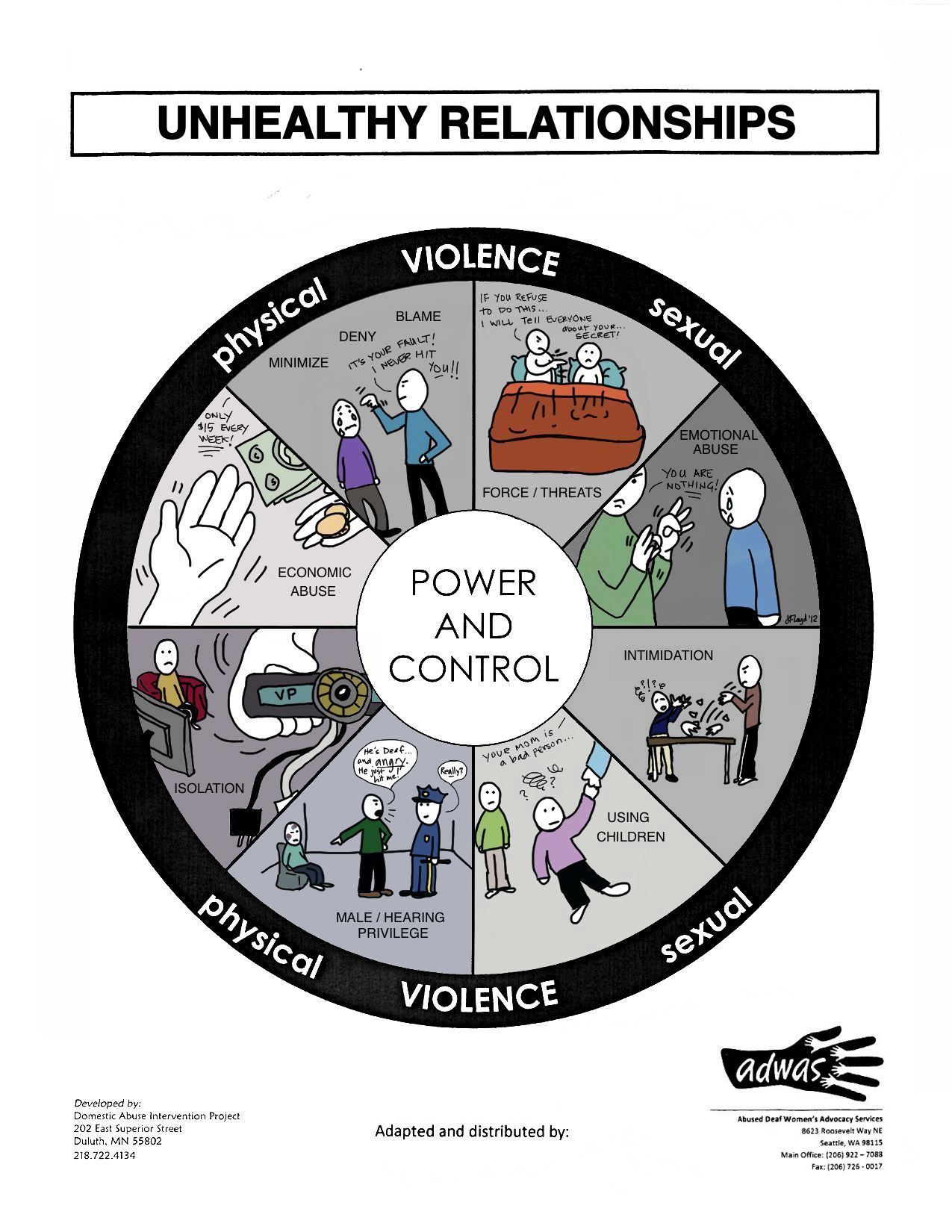
The following are examples of IPV unique to the Deaf community:
-
Intimidating gestures, expressions, floor stomping or pounding or exaggerated signing.
-
When angry signing close to a survivor’s face, criticizing the signing skills, or withholding information about calls or communication attempts.
-
Excluding survivor from social events with hearing people
-
Not allowing others to use sign language to communicate or wrongly translating to manipulate the situation.
Deaf victims of domestic violence often face unique circumstances:
-
Information can travel quickly within a Deaf, DeafBlind or hard of hearing community, compromising confidentiality and the victim’s safety.
-
Law enforcement and shelters are often not skilled at communicating with Deaf, DeafBlind or hard of hearing individuals and often don’t have interpreters.
-
Their abusive partners may take away their communication devices.
-
Their abusive partners may give false information to the victim to make them believe they have fewer options.
-
The victim may be isolated from family, friends, services, resources and options.
For those who are deaf there are also many more challenges when trying to get away from an abusive relationship. The biggest barrier to most is a lack of communication with support systems and lack of deaf community resources at local shelters. EVE provides services to all members of the community who need support or help.